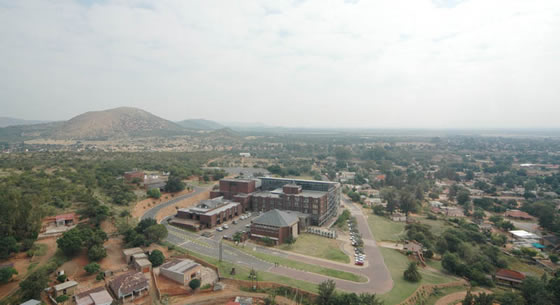
So last week I promised that I would consider telling you more about my years growing up in Phokeng.
As
Po said:
“ I feel like the stories you have to tell of the way of life when you were young are important because that way of life is probably going to be extinct soon. And as you are a storyteller, what better person to preserve an account of how life was for future generations than you? Future generations would know nothing of the way life was for you if they are not written into stories or memoirs now.”
So. I’m not going to promise to write my memoir, because I’m not in that space where I feel ready. But I decided to tell my story on (some) Fridays and see how it goes.
I decided to start with my first day of school, because it sorta helps me draw a line in the sand. Arbitrary I know, but for now, it works for me. Enough explanations! Let’s get to the (hopefully) interesting bits.
Birth of Independence
I don’t actually remember anything about the first day of school beyond the fact that two of my cousins (who were 6 and 8 and also starting school) were responsible for getting me to school that morning (and every morning thereafter).
My mom taught at a school outside Kgale, the village where I lived. Kgale is part of
Phokeng, which is made up of 29 villages. I think she had to catch a bus before 6am to get to her school on time. I'm not sure where my father worked then. I do know they were both long gone by the time I woke up in the mornings.
My grandmother was sickly ( and bedridden, and therefore no help) and my grandfather, who was already 87 years old then, wouldn't have known what to do with me, even if I gave him a chance.
Grandfather was an old, traditional man who I suspect, couldn't even contemplate giving a girl (or anyone for that matter) a bath. One of my earliest memories during those mornings was of me bragging to him that I managed to turn the radio on ( it played with a battery, which was expensive) and he threatened to give me a hiding if I didn't turn it off. IMMEDIATELY!
Undaunted, I told him to leave me alone or I'd sic my father on him and he'd give HIM a hiding. You can imagine my horror when he explained that my strong, fearless father, the threat that I could beat anyone into submission with, was actually his son. Sons always had to listen to their fathers, I thought, and there was no way mine would side with me against my new enemy. So I stayed well away from my grandfather in the mornings.
So, I was responsible for bathing and dressing myself and getting myself to school. My older sister, who is 3 years older, was not adopted by us yet, so she was not even a factor.
Also, at five, I was considered old enough to be able to do certain tasks for myself. And why wouldn't I? Most kids in Kgale village had been getting themselves ready and walking more than 7 kilometres to the then nearest Primary Schools and I only had to walk a much shorter distance.
Anyhoo, school was half day, so it was assumed I'd be home by the time I got hungry again. So no big worries about a 5 year old with a knife, trying to make sandwiches for school lunch:-).
So, most mornings, my two cousins would come to my house and start yelling for me to hurry up to get ready or we won’t have time to play with the other kids before the morning bell rang.
Not that we were walking far. Kgale Primary School was slightly more than 500 metres west of my home.
Birth of a school
At the beginning of 1973, Kgale Primary School was one of the biggest developments in the village of Kgale, or even in Phokeng in general.
It was a brand-new school and our batch of learners was the very first that school ever had.
We were a combination of new learners, like me, and local kids in higher standards (now called Grace 2 and Grace 3) who attended schools outside the village before and were culled from those schools to come closer to home.
Except, there was no actually no official structure to house Kgale Primary school. Lessons took place at the local Ethiopian church, and most of the younger learners ended up attending classes under the numerous trees surrounding the church. Which means…. yup… I began my academic career under a tree. Sometimes I look back and think, what a ridiculously cliche of Africa that is! But there it is.
I have vivid memories of learning to write the alphabet on the ground, on the soil, with my finger (not sure where my slate was those times.) And the one memory that stands out from that time is that it was hard to write the letter G on the ground. Too many lines working their way into each other!
Another vivid memory is the phraseology we used to ask to go to wee or do other private business. See there were no toilets, so you couldn’t ask to go to the toilet or bathroom. But, there was a small hill near the church, and in a pinch, you would ask the teacher for permission to “go to the small hill," pass as many trees as can hide you from public view, maybe even find a big boulder to hide behind, and then do your business. I hesitate to think about how hygienic that hill really was, but were always taught to make sure you don’t do your business in the footpaths, and you always, and I mean, always covered your organic matter with lots of soil and grass if that’s what you went there for.
And since this whole story was started by
my 2010 Blog Action Day: Water Story, let me mention that there was no water source at the school that first year. So if you were thirsty, you either waited until school let out, or if you were brave enough, you approached the nearby houses to ask for water. They were more likely to agree if you’re asking for teachers, who were highly respected, than mere students, who were too numerous to cater for and the families wouldn’t want to set their home as a precedent as a water source, when they too had to go fetch it from somewhere.
This situation didn't last long, though. There were other developments in the works during that same year....
To be continued next week....